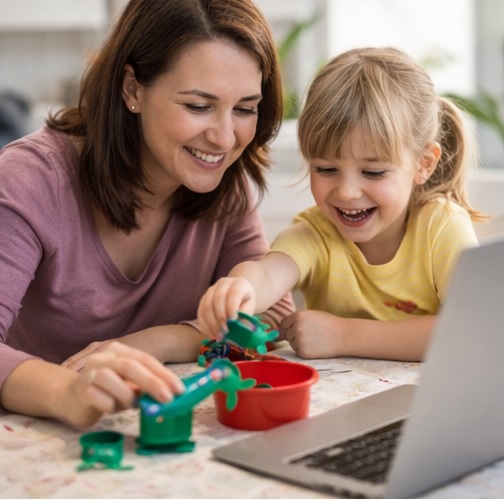

A mother and son play a card game to practice his speech sounds in therapy

How Much Home Practice Does My Child Need for Speech Therapy?

A common question I’m asked by parents is: “How much practice do we need to do at home?”

It’s a great question — and the fact you’re asking it already puts your child on the right track.

The short answer is: home practice really does matter, but it doesn’t need to be long, stressful, or perfectly done to be effective.

Why Home Practice Is So Important

Speech therapy sessions are incredibly valuable, but they only make up a small part of your child’s week. Most children see their speech pathologist once a week (sometimes fortnightly), which means the real opportunity for consolidation comes from what happens between sessions.

Research shows that children need lots of repetition to change speech sound patterns — often many more repetitions than can fit into a single therapy session. Not only that, but research suggests that the real magic happens when the practice occurs in small amounts regularly, rather than just a long practice all in one go.

A young boy practising his speech sounds

Therapy sessions with your speech pathologist help set you and your child up for success with the home practice. This may include teaching your child to produce a sound and getting them confident with that, teaching them to sequence the target sound with other sounds, and suggesting ideas and providing resources to make sure the home practice is fun for your child, and easy and painless for you.

Regular home practice helps:

  • Reinforce what your child is learning in therapy
  • Build confidence using new sounds outside the “therapy setting”
  • Support faster, more consistent progress

In other words, home practice helps turn “I can say it in therapy” into “I can say it everywhere”.

How Much Practice Are We Talking About?

This depends on the therapy approach, your child’s goals, and where they’re up to in learning a sound — so consider this general guidance only.

Many research-based speech sound approaches aim for frequent, short bursts of practice, rather than long sessions. For many children, this might look like:

  • Around 5 minutes, most days of the week
  • A focus on lots of repetitions
  • Practising at the right level (sounds alone, words, short phrases, etc.)
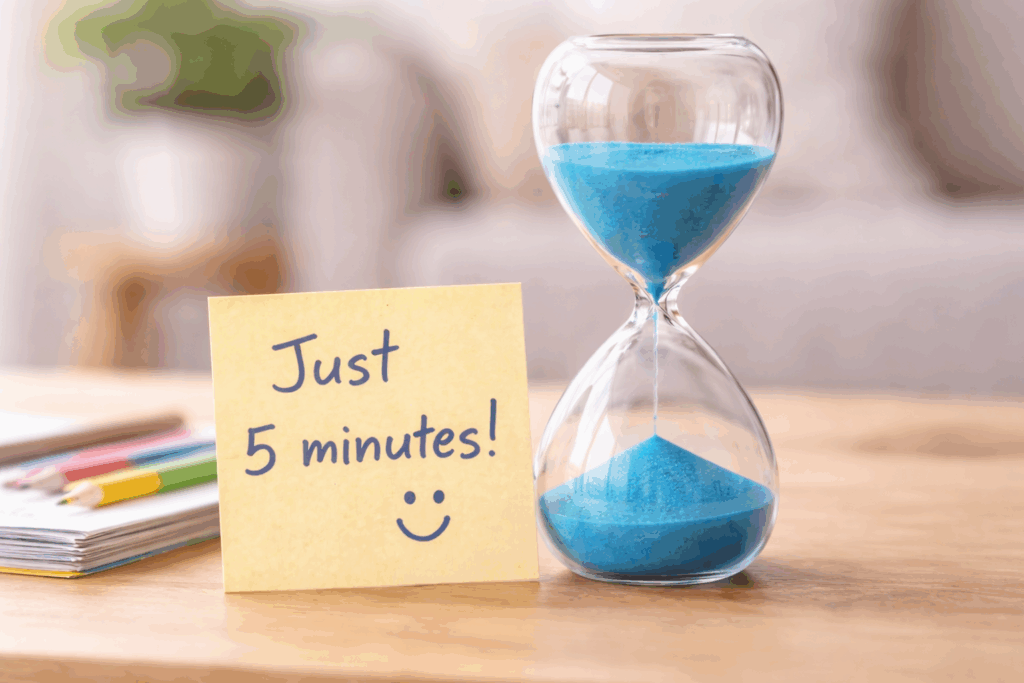
Speech therapy practice at home doesn't have to take ages - just a few minutes is all that's needed.

During your child’s therapy session, I will let you know:

  • What to practise
  • How much to practise
  • What to listen for

And this may change over time as your child progresses.

Quality Matters As Well As Quantity

It’s not just about doing practice — it’s about doing the right kind of practice.

Effective home practice usually means:

  • Working on the specific sound or goal your child is targeting
  • Being face-to-face, so your child can see and hear a clear model
  • Giving gentle feedback (not correcting every word your child says!)
  • Providing specific praise
  • Keeping it achievable and positive

Consistency and encouragement go a long way.

Make It Fun (Really!)

Let’s be honest — speech sound practice can be repetitive. The key to keeping kids engaged is to build practice into play.

Some easy ways to do this:

  • Take turns in a favourite board or card game, practising a sound before each turn
  • Use toys, books, or Lego your child already loves
  • Do short “mini practices” rather than one long session
  • Build practice into routines (before a story, after afternoon tea, before bed)
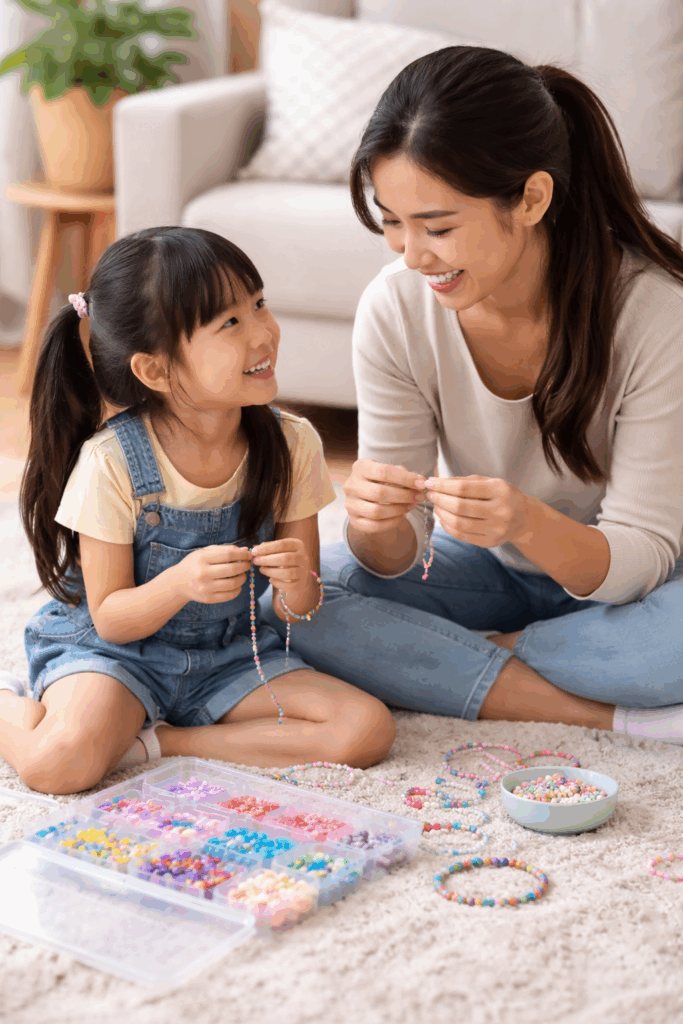
A little girl has fun making bracelets with her mother while they work on her speech sounds

Children are much more likely to practise when it feels like connection and play, not homework.

What If We Miss a Day (or a Few)?

That’s okay.

Life happens. Kids get tired. Families get busy. Missing a day of practice won’t undo progress. The goal is regular practice over time, not perfection.

If practice feels hard, frustrating, or isn’t working, that’s important information — and something to talk about with your speech pathologist.

Every Child Is Different

It’s important to remember that there’s no one-size-fits-all approach to home practice. How much, how often, and how practice looks will depend on:

  • Your child’s speech profile
  • The therapy approach being used
  • Your child’s age and attention
  • Family routines and capacity

When I work with families, I provide individualised advice and resources tailored to your child’s specific goals — and we adjust things as needed along the way.

The Takeaway

Home practice plays a big role in helping children make progress with speech sound therapy — but it doesn’t need to be overwhelming.

Short, regular, well-targeted practice, done in a supportive and playful way, can make a real difference. And you’re not expected to figure it all out on your own — your speech pathologist is there to guide you every step of the way.

Incorporating movement into an online speech assessment to keep it fun

What Does an Online Speech Assessment Involve?

If you’re considering an online speech assessment for your child, it’s completely normal to wonder what it actually involves — and whether it can really work through a screen.

The short answer is yes, it can. Online speech assessments are designed to be engaging, child-friendly, and thorough, while still feeling relaxed and supportive for both children and parents. Here’s a simple breakdown of what you can expect.

Before the Assessment: Getting the Background

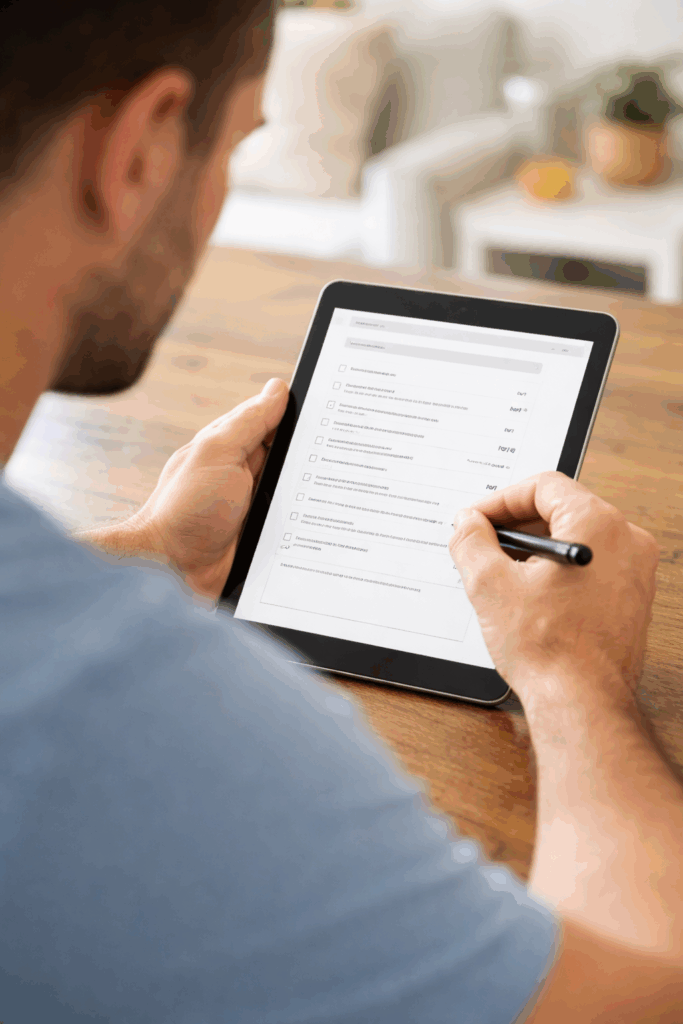
Before your child’s assessment, you’ll be asked to complete an online case history form. This gives me important background information about your child’s development, health, and communication, as well as any concerns you may have.

Most of the questions are quick checkboxes, and completing this beforehand means we can use the assessment session itself more efficiently — focusing on what matters most for your child, rather than spending time gathering basic information.

A father completes a case history form for the speech assessment from his ipad

Parents are also asked to complete a very brief questionnaire about how well their child’s speech is understood by others in everyday situations. This helps provide valuable real-world context alongside the formal assessment tasks.

During the Assessment: What Your Child Will Do

Online speech assessments typically run for around 45–60 minutes, but children are not expected to sit and concentrate for the entire time.

The session usually includes a mix of:

  • Speech tasks, such as naming pictures shown on the screen
  • Short activities or games to keep things fun and engaging
  • Conversation or play-based interaction, depending on your child’s age and needs
  • Time for discussion with parents, just like in a face-to-face assessment

One core part of the assessment is an articulation assessment, where your child is shown pictures online and asked to name them. This allows me to listen carefully to how your child produces different speech sounds.

If appropriate, I may also collect a speech sample, for example by asking your child to talk about a favourite toy, activity, or recent experience. This helps me understand how their speech sounds in more natural conversation.

Checking Oral Structures and Movement

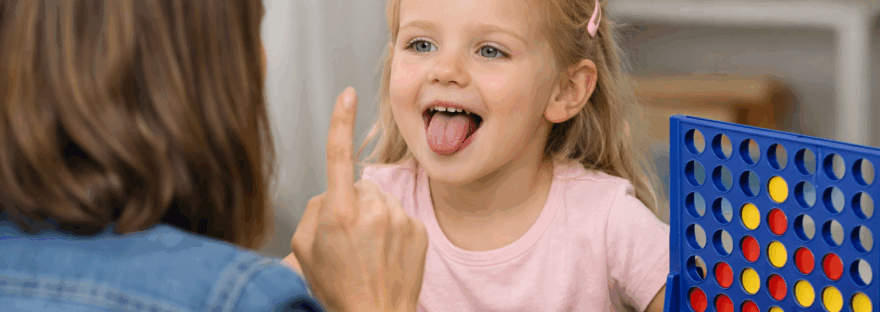
A young girl sticks out her tongue as part of the oral motor part of the telehealth speech assessment.

As part of every speech sound assessment, I complete an oral motor examination. This looks at how your child’s mouth, lips, tongue, and jaw move and work together for speech.

Online, this involves asking your child to do simple, playful movements like smiling, puckering their lips, or sticking out their tongue. The goal is to check that there are no underlying structural or movement-based factors affecting speech.

After the Assessment: What Happens Next?

After the assessment, I spend time analysing the assessment results and putting everything together. You’ll receive a clear summary outlining:

  • What’s going on with your child’s speech
  • Whether their speech development is within expected ranges
  • Practical recommendations for next steps

Depending on the results and parent preferences, recommendations might include:

  • Monitoring for now, with no therapy needed
  • A short, tailored home program
  • Regular speech therapy sessions (weekly or fortnightly)

We’ll always talk through the options so you can decide what feels right for your child and your family. You can read more about how online therapy words here.

What If My Child’s Speech Is More Complex?

Sometimes, speech sound difficulties turn out to be more complex than they first appear. If that’s the case, additional assessment time may be recommended so we can get a clearer picture. Any recommendations for further assessment are always discussed with you before proceeding.

How Much Does It Cost?

You can find out more about fees and any rebates your child may be eligible for here.

A Final Reassurance

Online speech assessments are designed to feel supportive, flexible, and child-friendly. They allow children to be assessed in a familiar environment, often helping them feel more relaxed and comfortable.

If you’re unsure whether an online assessment is the right fit for your child, you’re always welcome to get in touch and ask questions. I’m happy to talk things through.

A young boy having fun with telehealth speech therapy

Is online speech therapy effective?

If you’re thinking about speech therapy for your child, you might be wondering: does it really work online? The good news is — yes!

What the Research Says

A comprehensive review found that children receiving telehealth speech pathology services made similar gains to those receiving in‑person therapy — with no significant differences in measured outcomes between the two groups. This included improvements in speech sound production for school‑age children.

The review also summarised multiple studies showing that online therapy is a flexible and useful way to deliver speech therapy services for a range of communication needs across the age spectrum.

Additionally, a recent open‑access article exploring telehealth in the assessment and treatment of paediatric speech and language disorders found that clinicians view online delivery as effective and beneficial, including increased access and improved outcomes when implemented thoughtfully.

Finally, broader reviews of telehealth in speech pathology highlight that there’s a growing body of evidence supporting telehealth as a clinically effective option, with comparable outcomes to traditional in‑person services.

Here’s why telehealth works so well and why it might be a great option for your family.

A young boy practising his speech sounds from home via telehealth

Kids Often Engage Really Well with Screens

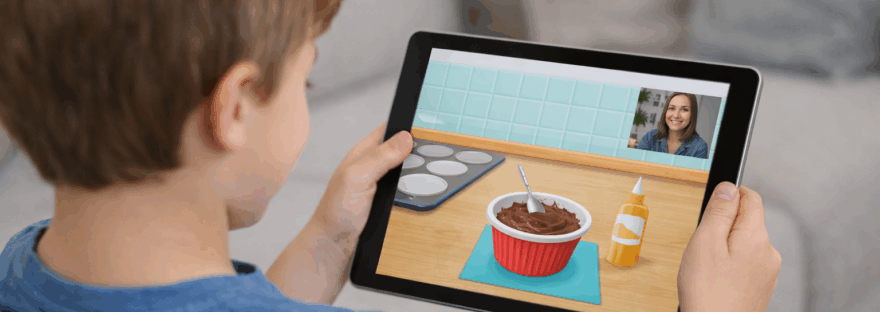
Many children focus surprisingly well on a screen, especially when sessions are interactive. Therapy isn’t just sitting and talking — we use games, short activities, and playful tasks to keep your child engaged. Sometimes these are games on a tablet or computer, and other times we use toys or activities you already have at home.

Convenience Makes Consistency Easier

Regular attendance is one of the most important factors in helping children make progress. Telehealth removes the stress of travel, long commutes, or rearranging schedules, making it much easier for families to attend sessions consistently.

Learning in a Familiar Environment

When therapy happens at home, children are already in a place where they feel comfortable and confident. This can help them try new speech sounds without feeling self-conscious, and supports generalising skills into everyday situations — like talking to family members, teachers, or friends.

Flexibility Keeps Children Focused

No two children are the same, so sessions are tailored to your child’s attention span and interests. I often incorporate:

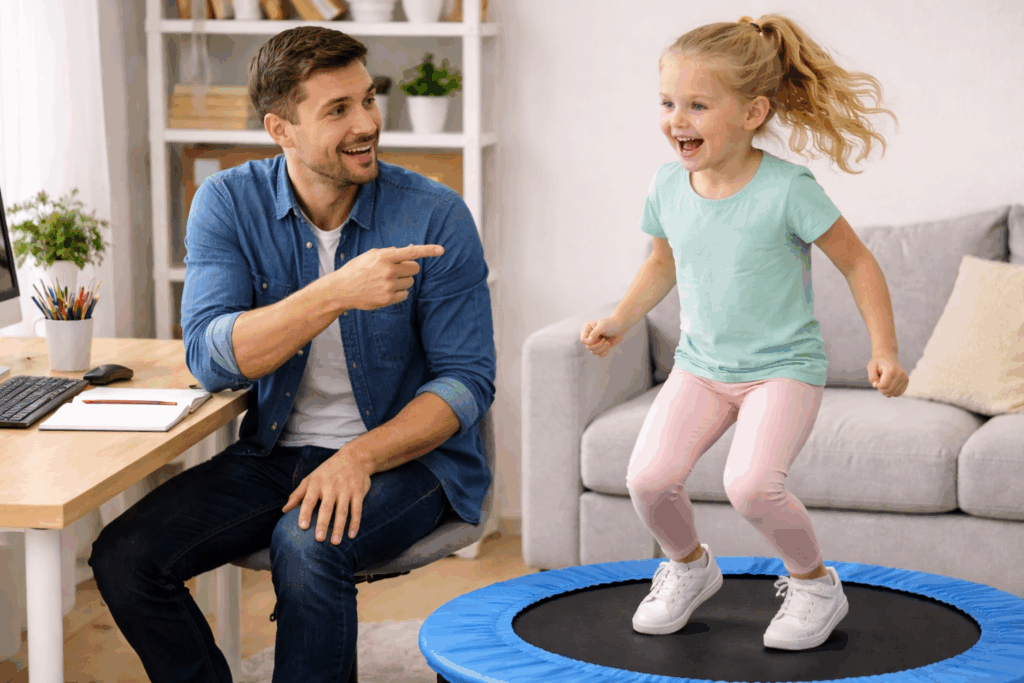
  • Movement breaks or physical activities to support focus
  • Hands-on games alongside speech practice
  • Interactive, playful approaches that make learning fun
We can incorporate movement at times to make online therapy more effective.

Why Telehealth Can Be Just as Effective

Research shows there’s no significant difference in outcomes between telehealth and in-person therapy for children with speech sound disorders. What matters most is the quality of the therapy, consistency, and active participation — not the mode of delivery.

In short, telehealth is a flexible, evidence-based option that allows your child to receive high-quality speech therapy without the stress of travel. It’s convenient for families, engaging for children, and can be just as effective as face-to-face sessions.

If you’d like to have a chat about your child and whether online therapy might work for them, please head over to the Contact page and we can make a time to talk over the phone, or

A son and father engaging in online therapy on their ipad.

How does online speech therapy work?

Worried about getting your child to speech therapy?

Between school runs, work, and daily life, finding the time to travel to a clinic can feel impossible. Telehealth (online) speech therapy brings professional support straight to your home (or wherever you are), so your child can get the support they need without the stress of commuting — all while keeping therapy fun, interactive, and effective.

This kind of service can help families who:

  • live in rural and remote communities
  • have busy lives and don’t want to waste time getting to and from a clinic
  • want more flexibility, such as enabling you to focus on your child during their therapy session while siblings play or sleep elsewhere
  • prefer for therapy to take place in a child’s natural environment, which can help with generalisation
  • don’t have easy access to transport for clinic visits
  • are waiting to access face-to-face services locally

What a Telehealth session looks like

Online therapy works just like face-to-face sessions. Children stay engaged with their speech practice through interactive games, shared screens, and even physical toys or activities you may already have at home. Sessions are fun, hands-on, and tailored to your child’s individual speech goals.

Two Ways to Do Telehealth Therapy

1. Regular Therapy Appointments
You can choose to have weekly or fortnightly regular appointments. This is ideal for children with multiple speech sound errors, and/or for parents who prefer to have ongoing support and guidance. These sessions involve your speech pathologist working directly with your child to help them learn how to produce their target sounds. It also provides an opportunity for parents/caregivers to discuss how previous home practice went, learn how best to prompt their child to produce target sounds, and collaboratively plan the next lot of home practice.

2. Home Program
Children with very simple speech goals may be appropriate candidates for a home program. If you choose this option, you’ll receive a set of activities and resources to carry out all the speech therapy yourself at home, rather than attending regular therapy sessions. Usually, this involves a single session after the assessment to explain the program and answer any questions. It’s still tailored to your child’s individual goals, and there’s always the option for additional appointments if/as needed so you can ask questions, check progress, and receive guidance and troubleshooting.

What you’ll need to get started

Getting started is simple. All you need is:

  • A reliable internet connection
  • A computer or iPad (phones are less ideal because the screen is small)
  • An email link to join the session that your speech pathologist will send prior to your appointment — no downloads, log-ins, or complicated software required!

Is telehealth secure and confidential?
Yes. Your child’s privacy and confidentiality are taken very seriously. Online sessions are delivered via secure, privacy-compliant telehealth platforms, and therapy is conducted from a private, professional setting. No sessions are recorded without consent, and all client information is stored and handled in line with Australian privacy requirements and professional standards. Telehealth allows your child to receive high-quality speech therapy while keeping their personal information safe and secure.

How parents can help their child succeed

Just like in face-to-face therapy, children make the most progress when parents are actively involved. Being present during sessions helps you learn techniques, understand how to carry out home practice, and support your child’s speech development every day.

Final thoughts

Telehealth speech therapy can be a flexible, effective option for many children with speech sound difficulties, but it’s not a one-size-fits-all solution. Every child is different, and what matters most is finding the approach that best supports their learning and confidence. If you’re unsure whether online therapy might be right for your child, you’re very welcome to get in touch for a chat. There’s no pressure and no obligation to commit — I’ll always be open and honest with you and will let you know if telehealth doesn’t seem like the right fit for your child’s needs.

A mother helping her young daughter with speech therapy

Is my child’s speech normal for their age?

Given that I provide telehealth speech therapy for children with difficulty saying sounds and words, this is, of course, the most common question parents ask me.

It’s also one of the main things I consider when I complete a speech sound assessment.

One of the tools I use to answer this question is speech sound development norms.

What are speech sound development norms?

Speech sound norms are based on large groups of children and tell us roughly when most children learn to say certain sounds correctly.

Updated Australian-based research shows that:

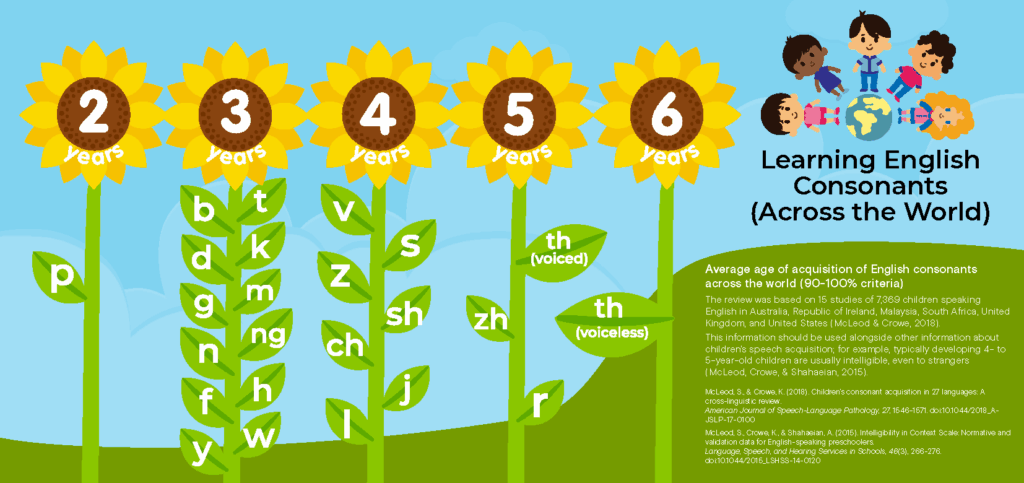
  • Early sounds like m, b, p, d, n, h, w, k, g, f, t, ng usually develop in the preschool years
  • Middle sounds like s, z, sh, ch, j often come in a bit later
  • Later-developing sounds like r and th may not be fully mastered until around 6 years

This means it is very normal for younger children to still be working on some sounds — especially the trickier ones.

Importantly, these norms are about when sounds are mastered, not when children start attempting them. Children don’t wake up one day suddenly being able to produce their k sounds correctly in all words, when they were previously producing them as a t sound.

Phonetic development vs phonological development

There are actually two different kinds of norms we look at:

1. Phonetic development (individual sounds)

This is about whether a child can physically produce a sound, like:

  • Saying k
  • Producing a nice, windy sounding sh
  • Saying s clearly instead of a lisp

This is what most people think of when they hear “speech sounds”.

The information in the above picture is based on 15 studies of 7,369 children speaking English in Australia, Republic of Ireland, Malaysia, South Africa, United Kingdom, and United States (McLeod & Crowe, 2018). They stated that: “Five-year-old children have acquired most consonants within their ambient language; however, individual variability should be considered” (p. 1546).

(Picture retrieved from https://www.csu.edu.au/research/multilingual-speech/speech-acquisition/learning-english-consonants).

2. Phonological development (patterns)

Phonological processes are patterns your child’s brain uses to simplify speech as it’s developing. Instead of being about one single sound, they affect groups of sounds or whole word shapes. Many of these patterns are normal at younger ages and are expected to disappear gradually over time.

Some common examples include:

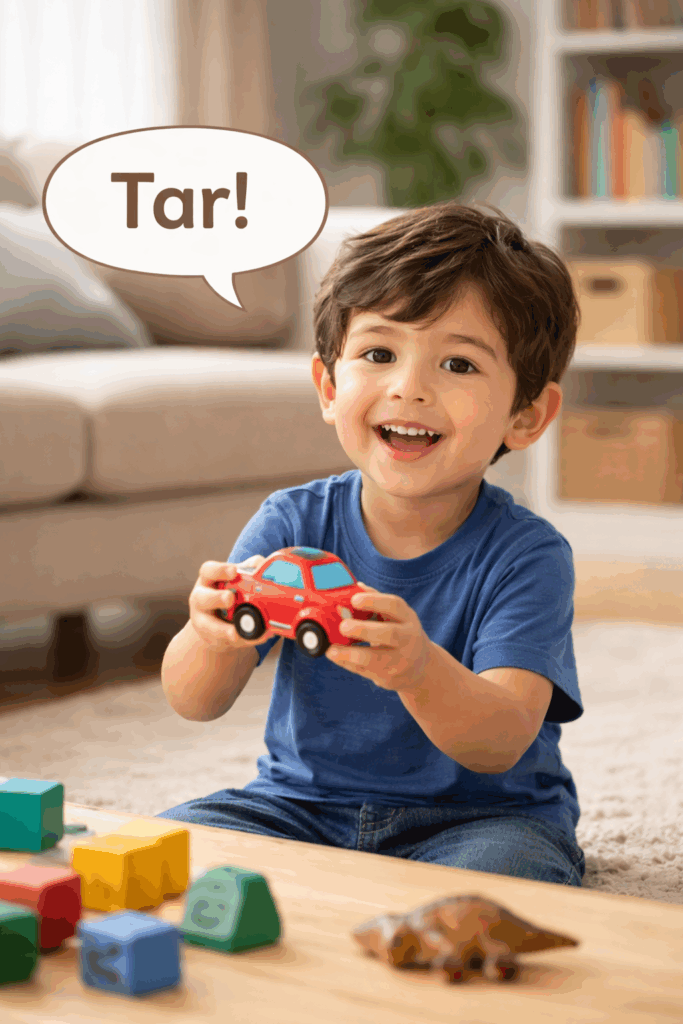
  • Fronting – saying sounds made at the back of the mouth at the front instead (e.g. “tar” for “car”, “doe” for “go”)
  • Cluster reduction – leaving out one sound when two or more sounds are together (e.g. “poon” for “spoon”, “tay” for “stay”)
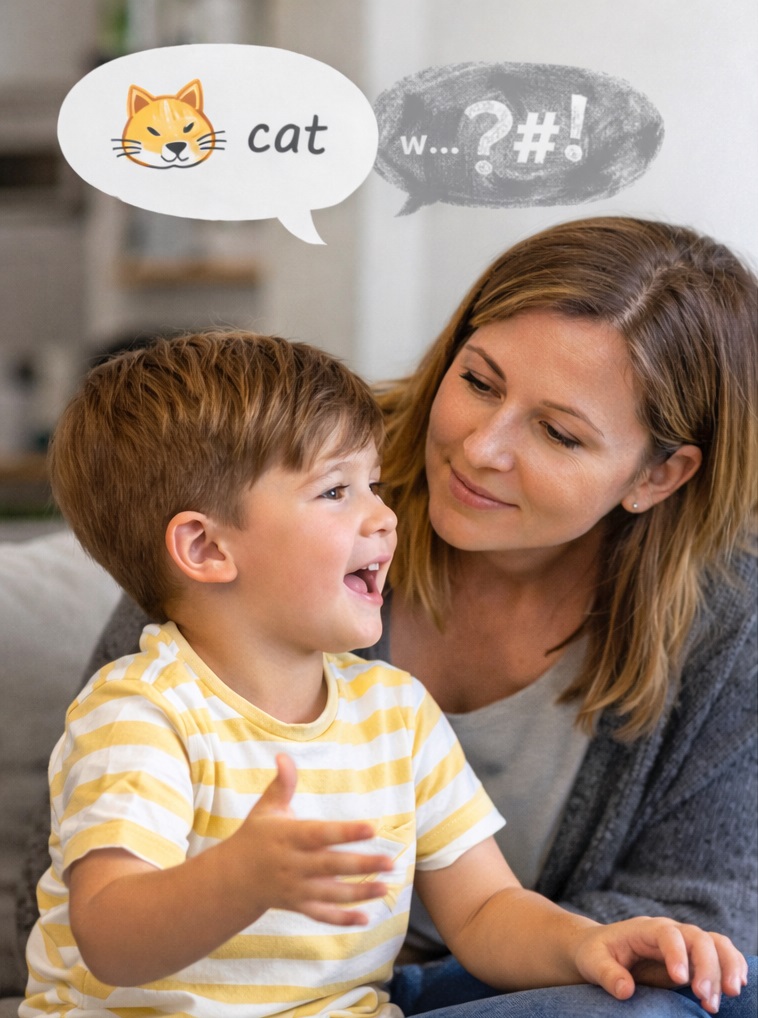
  • Final consonant deletion – leaving the last sound off a word (e.g. “ca” for “cat”, “beh” for “bed”)
  • Stopping – replacing long, flowing sounds with shorter ones (e.g. “tun” for “sun”, “doo” for “zoo”)

You might notice that:

  • Your child can say a sound or word correctly when you model it or ask them to repeat it
  • But as soon as they go back to talking naturally, the error comes straight back

When you slow things down and ask your child to copy you, they’re using conscious effort to make that sound.

But in everyday speech, their brain automatically falls back on the phonological pattern it’s used to. That’s why the sound may seem to disappear again straight away.

Speech therapy for phonological difficulties focuses on helping the brain learn new patterns, not just correcting individual sounds. This is different to how therapy would look if a child has difficulty physically producing a sound.

To make things a bit more confusing, it’s quite common for children to have more than one type of error. So they might be using an incorrect phonological process, but also have difficulty producing the target sound as well.

Why norms aren’t the whole story

While norms are useful, they don’t tell us everything. As I discuss in this post, other important factors include:

  • How easy your child is to understand in everyday conversations
  • Whether your child is frustrated by being misunderstood regularly
  • How speech difficulties are affecting confidence, learning, or friendships
  • Whether errors are changing over time or staying the same

This is why two children the same age can have very different therapy needs — even if they have similar kinds of errors.

When should I seek advice?

You don’t need to wait until your child is “outside the norms” to ask questions.

A speech pathologist can help you understand:

  • Whether errors are developmentally expected
  • Whether patterns should be resolving by now
  • What (if anything) to monitor or support at home

Sometimes reassurance is all that’s needed. Other times, early support can make a big difference.

Final thoughts…

Speech sound norms are a guide, not a deadline.

If you’re unsure about your child’s speech — especially if they’re hard to understand or they are becoming frustrated — getting individualised advice is always worthwhile.

Telehealth speech therapy makes it easy to access that support, wherever you are.

If you’d like help understanding your child’s speech development or whether telehealth therapy might be a good fit, feel free to get in touch.

A young girl is learning how to put her tongue up for the 'l' sound in speech therapy.

Does my child need speech therapy?

If you’ve ever found yourself smiling politely while your child passionately tells a story… and you catch about 40% of it… you’re not alone. Many parents wonder at some point: “Is this adorable mispronunciation just a cute phase, or should I get it checked out?” Great question. Let’s unpack it.

So how do you know whether it’s time for a speech pathology assessment? Here are some of the big things we look at.

1. Developmental Norms: What’s Expected, and When?

Children don’t master all their speech sounds at once. Some sounds come early, like p, b, and m, while others take their sweet time — “ch, sh, and j” are a bit later, for example, and r and th are even later developing still.

Speech pathologists use developmental norms (basically: charts that show the typical ages children learn specific sounds) to help decide whether a sound error is:

  • Totally normal for their age
  • Worth keeping an eye on
  • A sign that your child could benefit from early support

You don’t need to memorise these charts — that’s our job — but if your 4-year-old is still saying “tat” for cat or your 5-year-old still can’t manage s or l, it may be worth a check-in.

2. Functional Impact: Can People Actually Understand Them?

This is the big one. Even if your child is still within the “normal” age range for some sounds, we also consider how those errors affect daily life.

We consider:

  • How often do parents/primary caregivers and siblings understand what your child says?
  • Do people outside the family understand your child?
  • Do kids at preschool ask “what?” a lot?
  • Does your child get frustrated when they’re not understood?
  • Do teachers or carers regularly mention unclear speech?

If communication breakdowns happen often — especially with unfamiliar listeners — that’s a strong sign an assessment could help.

And here’s something many parents don’t realise: Children with multiple speech sound errors (especially ones that impact intelligibility) may be more likely to have future difficulties with reading and spelling. That’s because speech, reading and spelling all use the same underlying sound-awareness skills. So early support can give them a smoother start with literacy skills when they start school.

3. Your Family’s Priorities: Is Now the Right Time?

Let’s be honest: speech therapy is a commitment — not a massive one, but it does require consistency.

A typical speech sound program needs:

  • Weekly or fortnightly sessions, and
  • A few minutes of home practice most days

It doesn’t have to be much (truly, just a couple of minutes!), but the magic is in the repetition.

If now’s not a great time for your family — new baby, shifting houses, life doing its unpredictable-life things — then consider whether you’ll have the time and energy resources needed to make the program optimally effective. But if you can make space for a few minutes a day, you’ll see progress faster and with much less stress.

The good news? If getting to and from appointments feels impossible, I offer Telehealth sessions, which means no finding parking, no bag-packing, no rushing across town. Kids often do brilliantly online, and parents barely have to wrangle anything.

So… Does Your Child Need Speech Therapy?

Here’s the short version:

Your child might benefit from an assessment if you’re seeing things like:

  • Sound errors that are no longer typical for their age
  • Difficulty being understood by people outside the family
  • Communication frustrations or lots of “huh?” moments
  • Several sound errors that make their speech noticeably unclear

And — equally important — if it feels like it might be time, trust that instinct. You’re with your child more than anyone else, and you know when something isn’t quite clicking.

An assessment doesn’t lock you into anything. It simply gives you clarity, recommendations, and — if needed — a personalised plan.

Final Thoughts

Speech sounds develop at different rates, and most kids have at least a few quirky mispronunciations along the way. But if your child is harder to understand than their peers, or you just want some expert reassurance, a speech pathology assessment can give you a clear picture and a plan.

Early support almost always leads to easier, faster progress — and clearer, more confident communication.